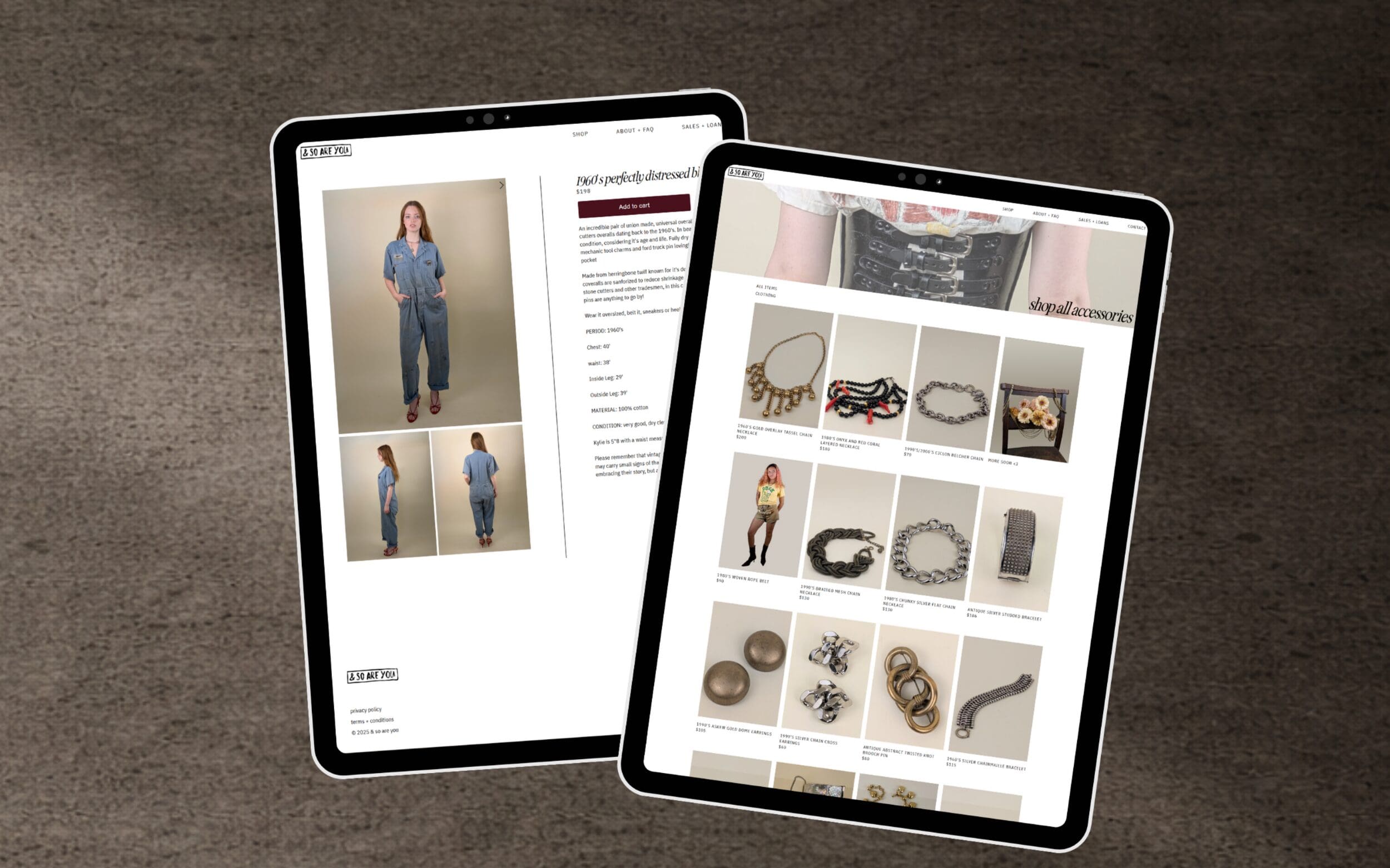
Early in any project, there is a moment where two things are competing for the same space. One is the desire to make something genuinely beautiful: considered, original, visually confident. The other is the need for that thing to work, to serve a clear purpose, to help a business achieve something measurable.
A lot of design studios quietly prioritise one over the other. The more commercially minded ones produce work that functions well but looks like every other website in the category. The more creatively driven ones sometimes produce work that wins awards and loses clients.
We think both failures are avoidable. Here is how we approach the problem.
Strategy is not the enemy of beauty
There is a pervasive idea in the design world that strategic thinking and creative freedom are in tension: that the more you know about conversion rates, user behaviour, and business objectives, the less room you have to make something that surprises people.
We have not found this to be true. Strategy, done well, does not constrain creative thinking; it directs it. Knowing that a website’s primary goal is to generate leads from a specific type of client, for example, does not dictate what the site looks like. But it does tell us what the site needs to feel like: credible, clear, confident. It gives us a target to design towards. That is not a limitation. That is a brief.
Where we start: the questions before the ideas
Before we open a design application, we spend time asking questions that have nothing to do with aesthetics. Who is this for, and what are they hoping to find? What does success look like in six months? What does the client do better than anyone else, and how do we make that legible through design?
These questions are not always comfortable. Sometimes they surface the fact that a client is not entirely clear on who their audience is, or that their positioning is fuzzier than they had realised. We think that is useful information, and we think the design process is a good moment to work through it, because a website built on a vague foundation will be vague by design, however beautiful it looks.
The moment beauty earns its place
Once we are clear on what the work needs to do, the creative work begins in earnest. And this is where we push. Not towards safe, competent, category-appropriate design, but towards something that is genuinely distinctive: a typographic choice that feels unexpected but right, a colour palette that is specific rather than generic, a layout that guides the eye in a way that feels natural and considered at the same time.
We believe that beauty is not decoration. A website that is visually arresting earns more attention and more trust than one that is merely tidy. When something looks as though care has been taken over it, people assume, usually correctly, that care has been taken over the underlying business too. The visual quality of your website is a signal about the quality of your work. We take that seriously.
How the two inform each other
The most interesting part of how we work is the conversation that happens between the strategic and the creative throughout a project, not just at the beginning. A design decision might prompt a strategic question: if we lead with this visual, does it attract the right audience? A strategic consideration might open up a creative opportunity: because this client’s main differentiator is their process, can we find a way to make the process itself feel beautiful?
This back-and-forth is not inefficiency. It is how good work gets made. The strategy keeps the creativity honest; the creativity keeps the strategy from becoming mechanical. Neither one is subordinate to the other.
What this means for clients
When clients come to us, they sometimes expect to have to choose: do they want something that looks great, or something that performs? We try to make that a false choice from the first conversation.
It means we ask a lot of questions before we show a single concept. It means we explain our creative decisions in terms of what they are trying to achieve, not just how they look. And it means we measure success not only by how the work looks on the day it launches, but by how well it serves the business in the months that follow. Beautiful work that does not convert is not good work. Neither is effective work that no one wants to look at. We are after both.If you would like to talk through a project, book a free discovery call and let’s see whether we are a good fit.
Leave a Reply Cancel reply
@ 2025 copyrighted | eleven eleven studio is a trading name of eleven eleven creative ltd
@ 2026 copyrighted | eleven eleven studio is a trading name of eleven eleven creative ltd
home
our work
journal
contact
services
terms + conditions
privacy policy
home
our work
journal
contact
services
[email protected]
